
Secondary Drowning: Myth, Reality and Warning Signs
Every summer, stories appear online warning parents about "secondary drowning" or "dry drowning" occurring days after a child has been swimming. While these terms are no longer commonly used by medical professionals, breathing complications can occasionally develop after water has been inhaled during a water incident.
Understanding the facts can help families recognise warning signs, seek medical help when needed and avoid unnecessary panic.
What Is "Secondary Drowning"?
The term "secondary drowning" was traditionally used to describe breathing difficulties that developed after water had entered the lungs during a submersion incident.
Today, medical professionals generally refer to these incidents simply as drowning or non-fatal drowning with complications, as the old terminology could be misleading.
Can Symptoms Develop Later?
Yes.
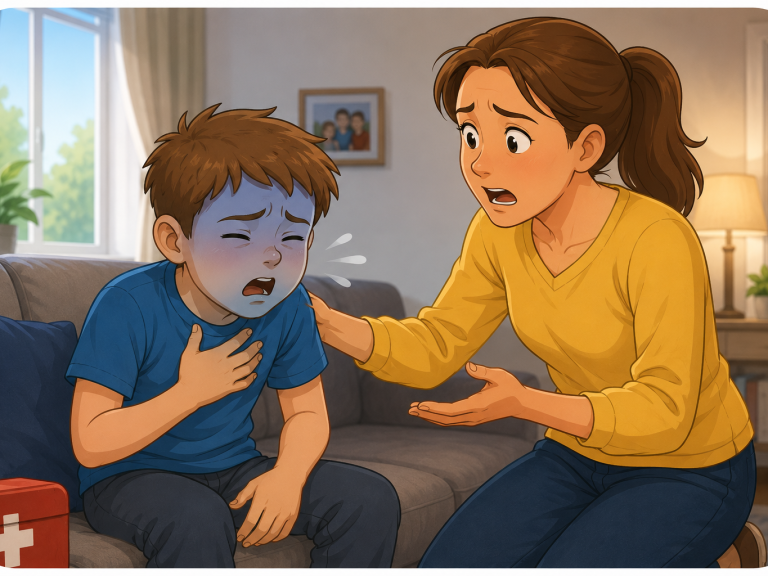
Most people who inhale a small amount of water recover without any problems. However, in some cases, irritation or inflammation in the lungs can cause symptoms to develop after the incident.
Most symptoms appear:
- Within the first few hours.
- Usually within 24 hours.
- Occasionally, water safety professionals recommend remaining aware of symptoms for up to 48–72 hours following a significant water incident.
Warning Signs To Watch For
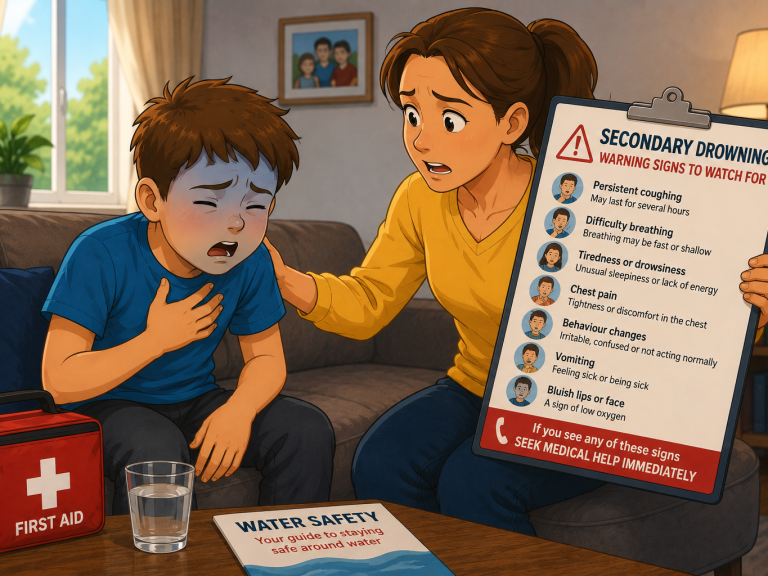
Seek medical advice if someone develops:
- Persistent coughing.
- Difficulty breathing.
- Wheezing or noisy breathing.
- Chest pain.
- Extreme tiredness or unusual drowsiness.
- Vomiting after a water incident.
- Confusion or unusual behaviour.
- Blue or grey lips or skin.
When Should You Call 999?
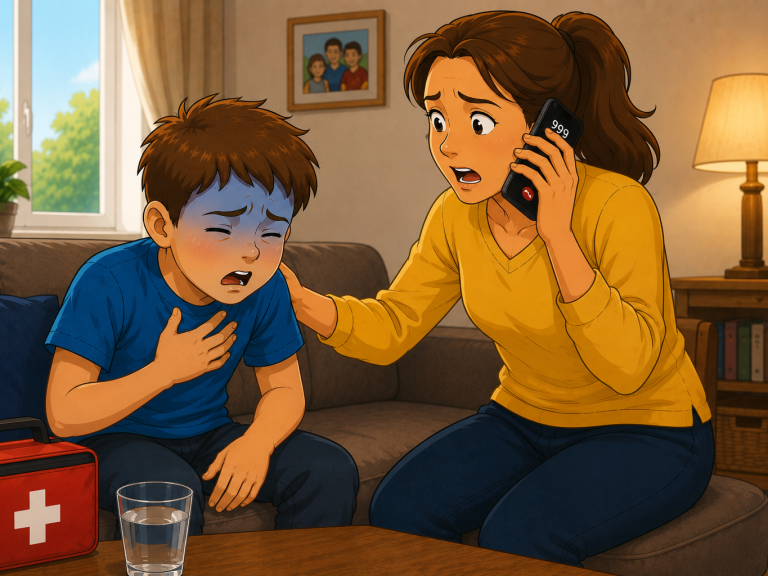
Call 999 immediately if the casualty:
- Is struggling to breathe.
- Becomes less responsive.
- Has blue or grey lips.
- Loses consciousness.
- Shows signs of severe breathing difficulties.
If symptoms develop after a water incident, always mention the water exposure to emergency services or healthcare professionals.
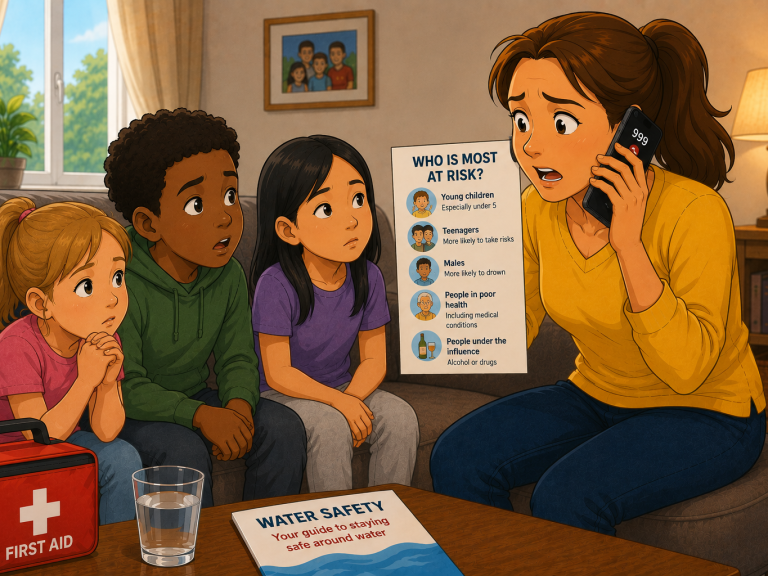
Who Is Most At Risk?
Anyone can be affected after inhaling water, but children may find it more difficult to explain how they feel or recognise symptoms developing.
Parents, carers and supervisors should pay particular attention after:
- Significant submersion incidents.
- Rescue situations.
- Episodes involving coughing or choking in the water.
- Near drowning incidents.
82%
of people who accidentally drown in the UK are male.
400+ people
lose their lives in UK waters every year.
47%
of child drowning deaths occur in inland water such as rivers and lakes.

Elite Lifesaving Skills
Explore our practical lifesaving, first aid, workplace safety and water safety training across London and Essex.
Explore More from Elite Lifesaving Skills
The Water Safety Code
Learn the key principles of staying safer around water, including how to recognise hazards, understand your surroundings and know what to do in an emergency.
Heatwave Water Safety
Learn how to stay safer around pools, rivers, lakes and open water during periods of hot weather