
How to Become a Pool Lifeguard in the UK
Could you be the person someone depends on in an emergency?
Lifeguarding is more than a job — it's a responsibility. Lifeguards prevent accidents, respond to emergencies and provide lifesaving care when seconds matter most.
If you're looking for a rewarding qualification that builds confidence, leadership and real-world skills, becoming a lifeguard could be the perfect next step.
What Does a Lifeguard Do?
Lifeguards are responsible for:
- Preventing accidents before they happen.
- Supervising swimmers.
- Carrying out rescues.
- Providing first aid and CPR.
- Responding to emergencies.
- Supporting customers and pool users.
- Maintaining a safe environment.
A good lifeguard uses communication, observation and judgement just as much as rescue skills.
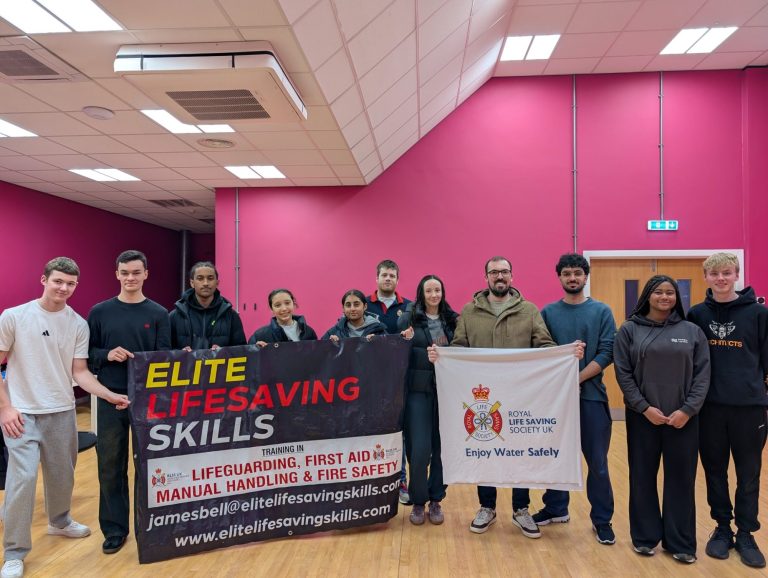
Why Become a Lifeguard?
Becoming a lifeguard is more than just gaining a qualification. It can provide:
- A source of income and flexible work.
- Regular shifts that fit around school, college or university.
- Valuable experience for university applications and future careers.
- UCAS points through related qualifications and further training opportunities.
- Confidence, leadership and teamwork skills.
- A pathway into careers such as emergency services, teaching, healthcare and the leisure industry.
Most importantly, you'll gain the skills and confidence to make a real difference when someone needs help.
What Can Lifeguarding Offer You?
What Can Lifeguarding Offer You?
- A regular income and flexible work.
- Hours that fit around school, college or university.
- Free or discounted gym membership with many employers.
- Opportunities to work abroad in hotels, resorts and holiday parks.
- Valuable work experience for your CV and university applications.
- Confidence, teamwork and leadership skills.
- Career progression into swimming teaching, management, training and the wider leisure industry.
- Lifesaving skills that stay with you for life.
Step 1 - Meet the Entry Requirements
To enrol on the National Pool Lifeguard Qualification (NPLQ) you must normally:
- Be 16 years old or over at the time of assessment.
- Be physically fit enough to complete the course.
- Pass the pre-course swim test.
Step 2 - Pass the Swim Test
Most training providers require candidates to:
- Swim 50 metres in under 60 seconds.
- Swim 100 metres continuously on your front and back.
- Tread water for 30 seconds.
- Surface dive to the deepest part of the pool.
- Recover a weighted object from the pool floor.
Step 3 - Complete the NPLQ Course
The National Pool Lifeguard Qualification covers:
- Lifeguard theory.
- Pool supervision.
- Rescue skills.
- CPR and AED.
- First Aid.
- Spinal injuries.
- Emergency Action Plans.
Most courses run over five intensive days or over several weekends.
Step 4 - Pass the Assessment
Candidates complete both practical and theory assessments to demonstrate they can work safely and effectively as a pool lifeguard.
Step 5 - Start Your Lifeguarding Career
Once qualified you can work in:
- Leisure Centres
- Schools
- Hotels
- Holiday Parks
- Health Clubs
- Private Pools
- Water Parks
Many lifeguards continue their development by becoming:
- Swimming Teachers
- Trainers and Assessors
- Pool Plant Operators
- Duty Managers
- Lifeguard Instructors
Elite Lifesaving Skills
Explore our practical lifesaving, first aid, workplace safety and water safety training across London and Essex.
Ready to Start Your Lifeguarding Journey?
Becoming a lifeguard starts with the right training. The RLSS UK National Pool Lifeguard Qualification (NPLQ) is the recognised route into pool lifeguarding and develops the practical rescue, supervision, CPR and first aid skills needed for the role.
Explore More from Elite Lifesaving Skills
Hotel Pool Emergency Response – SPERA
Discover specialist pool emergency response and rescue training for hotel, spa and leisure teams.