
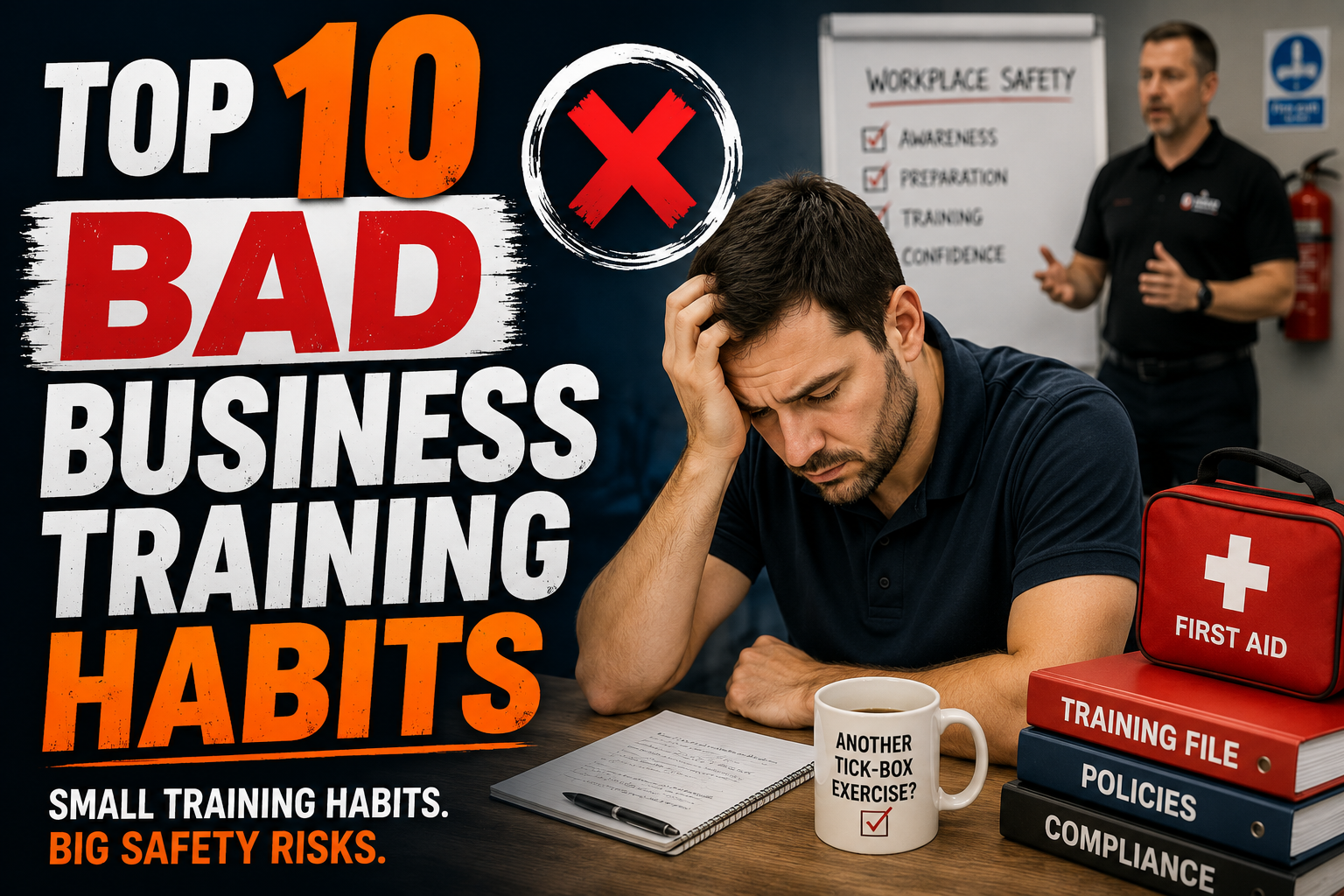
Top 10 Workplace Training Mistakes Businesses Still Make in 2026
Top 10 Workplace Training Mistakes Businesses Still Make
Small training habits can create big safety risks.
Investing in workplace training is essential, but simply booking a course doesn't always produce safer workplaces.
From treating training as a one-off exercise to overlooking practical scenarios, small habits can reduce the effectiveness of even the best training programmes.
Here are ten common mistakes we see—and how organisations can improve them.
1. Treating Training as a Tick-Box Exercise
Training should prepare people to respond confidently in real situations, not simply achieve a certificate.
2. Waiting Until Certificates Have Expired
Refresher training should be planned before qualifications expire to help maintain knowledge and confidence.
3. Forgetting Practical Scenarios
Real emergencies rarely happen exactly as they do in a classroom. Practical exercises help delegates apply their learning under pressure.
4. Using the Same Training for Every Workplace
Every organisation faces different risks. Training should reflect the environment people actually work in.
5. Not Practising Emergency Procedures
Knowing an evacuation plan is one thing. Practising it is another.
6. Assuming Experienced Staff Don't Need Refreshers
Even experienced employees benefit from regular updates, changes in guidance and practical practice.
7. Ignoring New Starters
Safety training shouldn't wait until "the next course." New staff should receive appropriate training as soon as reasonably possible.
8. Choosing Price Over Quality
The cheapest course isn't always the best value if delegates leave lacking confidence to use their skills.
9. Not Asking Questions During Training
A good training environment encourages discussion, questions and practical learning—not simply listening to a presentation.
10. Measuring Success by Certificates Alone
The real measure of effective training is whether people feel prepared to respond when it matters most.
Conclusion
Effective workplace training is about far more than compliance.
By avoiding these common mistakes, organisations can help build safer workplaces, more confident teams and a stronger safety culture.
At Elite Lifesaving Skills, every course follows The ELS Standard™, our practical training approach designed to develop confidence, competence and real-world readiness.
Is Your Training Program Working for Your Team?
Whether you're reviewing your First Aid, Fire Marshal, Manual Handling or Workplace Safety training, we'd be happy to help you identify the right solution for your organisation.
👉 Contact Elite Lifesaving Skills today for a no-obligation discussion.