
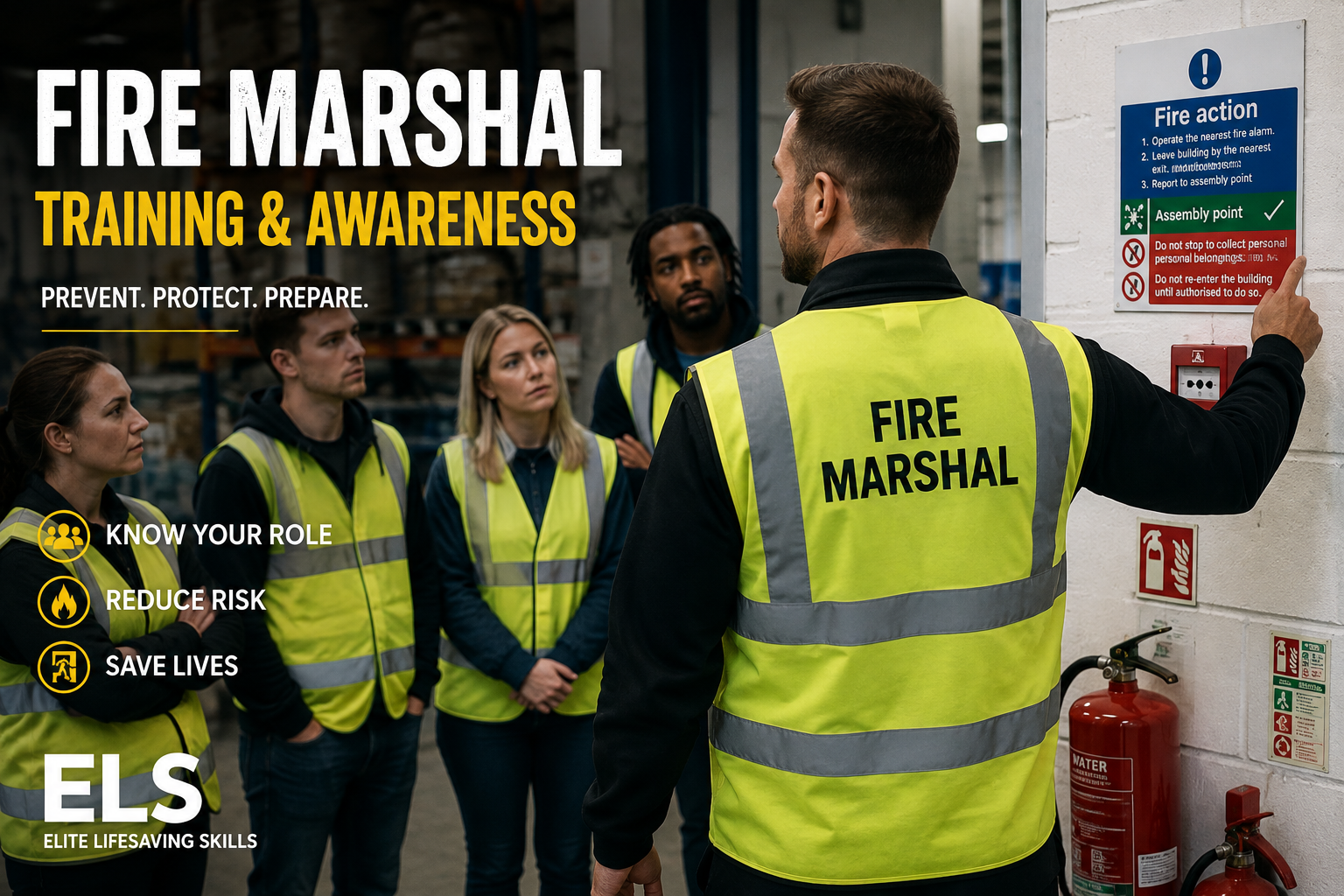
Do I Need a Fire Marshal? How Many Do I Need? | UK Guide
Do I Need a Fire Marshal at Work? How Many Fire Marshals Does My Business Need?
If you own or manage a workplace, you may have wondered:
Do I legally need a fire marshal?
And if you do:
How many fire marshals should my workplace have?
There isn't one fixed number that applies to every UK business.
The number of trained fire marshals or fire wardens your organisation needs should be determined by your fire risk assessment, the size and layout of your premises, the people using the building and how your organisation operates.
What Is a Fire Marshal?
A fire marshal, sometimes called a fire warden, is a member of staff who has been given additional responsibilities relating to fire safety and emergency procedures.
Depending on the workplace and its emergency plan, their role may include:
- Helping people evacuate safely
- Directing people towards appropriate escape routes
- Checking designated areas during an evacuation where safe to do so
- Helping account for people at the assembly point
- Understanding workplace fire procedures
- Identifying and reporting potential fire hazards
- Assisting visitors and members of the public
- Supporting people who may require additional assistance
Fire marshals should receive appropriate training so they understand their responsibilities and the limitations of their role.
Does Every Workplace Need a Fire Marshal?
UK fire safety legislation places responsibilities on the Responsible Person for non-domestic premises.
Depending on the circumstances, this may be an employer, owner, landlord, occupier or another person with control of the premises.
The Responsible Person must ensure appropriate fire safety arrangements are in place, including completing and regularly reviewing a fire risk assessment.
The organisation must also appoint a sufficient number of competent people to assist with preventive and protective fire safety measures where required.
In many workplaces, employees given specific responsibilities during an evacuation are commonly known as fire marshals or fire wardens.
How Many Fire Marshals Do I Need?
There isn't a universal legal rule stating that every business must have one fire marshal for a particular number of employees.
Instead, your requirements should be determined through your fire risk assessment and emergency plan.
Factors to consider include:
- Number of employees
- Number of floors
- Size and layout of the premises
- Number and location of escape routes
- Workplace fire risks
- Shift patterns
- Lone workers
- Visitors and members of the public
- People who may require assistance during evacuation
- Annual leave and sickness
- Separate buildings or work areas
- How your evacuation procedure operates
A small single-floor office with a relatively simple layout may have very different requirements from a large warehouse, leisure centre, school, hotel or care setting.
The important question isn't simply:
"How many employees do we have?"
It is:
"Do we have enough appropriately trained people available to safely implement our emergency procedures?"
Don't Forget Holidays, Sickness and Shift Patterns
One of the most important considerations is cover.
Imagine a workplace has two trained fire marshals.
One is on annual leave.
The other is off sick.
The organisation could suddenly find that its planned fire-safety arrangements cannot operate as intended.
Businesses should therefore consider enough trained personnel to maintain appropriate cover during:
- Annual leave
- Sickness
- Lunch breaks
- Different shifts
- Evening working
- Weekend working
- Staff working away from the premises
This can be particularly important for businesses operating across several floors, buildings or shifts.
What About People Who Need Help Evacuating?
Your fire risk assessment should consider everyone who may be present within the premises, including people who may require additional assistance during an emergency.
This could include people with disabilities, mobility difficulties or other needs that may affect their ability to evacuate.
Where additional assistance is required, appropriate arrangements should be planned in advance.
Your staff and fire marshals should understand the arrangements relevant to their workplace rather than attempting to create an evacuation plan during an emergency.
What Should Fire Marshal Training Cover?
Someone expected to perform a fire marshal or fire warden role should understand considerably more than simply where the nearest fire exit is.
Good Fire Marshal training may cover areas including:
- Fire prevention
- Common causes of workplace fires
- How fires start and spread
- Fire detection and alarm systems
- Emergency procedures
- Evacuation procedures
- Escape routes and exits
- Fire doors
- Fire extinguishers
- Supporting people during evacuation
- Human behaviour during emergencies
- The responsibilities of a fire marshal or fire warden
Most importantly, learners should understand how this knowledge relates to their actual workplace and emergency procedures.
Fire Marshal Training in London and Essex
We work with businesses, community organisations, leisure facilities and other workplaces to provide practical fire-safety training.
Our approach focuses on helping learners understand what they may actually need to do during an emergency — not simply completing a course and receiving a certificate.
So, How Many Fire Marshals Should You Train?
There isn't one number that can correctly answer that question for every organisation.
Start with your fire risk assessment.
Consider your:
- Premises
- Employees
- Visitors
- Fire risks
- Evacuation procedures
- Working hours and shifts
- People requiring additional assistance
- Holiday and sickness cover
Then make sure you have a sufficient number of appropriately trained people available whenever your workplace is occupied.
If you're unsure about your fire-safety arrangements or fire risk assessment, seek advice from an appropriately competent fire-safety professional.
Frequently Asked Questions About Fire Marshals
Is a Fire Marshal a Legal Requirement in the UK?
UK fire safety law places duties on the Responsible Person to manage fire risks and put appropriate preventive and protective measures in place.
This includes appointing one or more competent people where necessary to assist with those measures.
Whether staff are specifically called fire marshals, fire wardens or another title is less important than ensuring your organisation has sufficient competent people to carry out the responsibilities identified within its fire risk assessment and emergency procedures.
How Many Fire Marshals Do I Need for 50 Employees?
There isn't a universal legal ratio that says a workplace with 50 employees automatically requires a particular number of fire marshals.
Your fire risk assessment should determine the appropriate arrangements.
For example, 50 people working together on one floor may present very different evacuation requirements from 50 employees spread across several floors, separate buildings or different shifts.
You should also consider sickness, annual leave and other situations where trained personnel may be absent.
Is a Fire Marshal the Same as a Fire Warden?
The terms fire marshal and fire warden are often used interchangeably within UK workplaces.
Individual organisations may give the roles slightly different responsibilities.
What matters is that everyone understands their responsibilities within the workplace's fire-safety and emergency arrangements.
Can the Responsible Person Also Be the Fire Marshal?
Depending on the organisation and its fire-safety arrangements, the Responsible Person may also carry out certain fire-safety duties if they have the necessary competence.
However, larger or more complicated workplaces may require several trained people to ensure responsibilities can be carried out effectively.
Your fire risk assessment should determine what is appropriate.
Do I Need a Fire Marshal on Every Floor?
Not automatically.
However, the number of floors and the layout of your premises are important considerations when deciding how many trained people you require.
Large or multi-storey buildings may require additional arrangements to ensure areas can be managed appropriately during an evacuation.
This should be determined through your fire risk assessment and emergency plan.
Do Night Shifts Need Fire Marshals?
Your fire-safety arrangements need to work whenever your workplace is occupied.
If your organisation operates evenings, nights or weekends, you should consider whether enough competent people are available during those periods to implement your emergency procedures.
Training several people across different shifts may therefore be necessary.
What Happens if Our Fire Marshal Is on Holiday?
This is exactly why businesses should consider cover rather than training only the smallest possible number of people.
Annual leave, sickness, training days, meetings and other absences should be considered when deciding how many employees need appropriate fire-safety training.
Do Small Businesses Need Fire Marshals?
Small businesses still have fire-safety responsibilities.
However, a small, simple, low-risk workplace may require different arrangements from a large or complicated premises.
Your fire risk assessment should determine the preventive and protective measures required and whether additional competent people need to be nominated.
How Often Should Fire Marshal Training Be Refreshed?
Fire-safety training should not be treated as something employees complete once and then forget.
Training should be reviewed and refreshed as appropriate, particularly when there are significant changes to the workplace, procedures, risks or an individual's responsibilities.
Employers should also ensure staff remain familiar with their workplace's fire and evacuation procedures.
Can a Fire Marshal Use a Fire Extinguisher?
Fire marshals should only undertake responsibilities they have been appropriately trained and instructed to perform.
Nobody should put themselves at unnecessary risk attempting to fight a fire.
Your organisation's procedures and training should make clear what staff are expected to do if a fire occurs.
Need Fire Marshal Training in London or Essex?
Elite Lifesaving Skills provides practical Fire Marshal and Fire Safety training across London, Essex, Redbridge and surrounding areas.
Whether you're training new fire marshals, increasing cover across different shifts or reviewing your organisation's workplace fire-safety training, we can discuss the training requirements for your team.
Contact Elite Lifesaving Skills to discuss Fire Marshal Training for your organisation.